Thursday, August 27, 2015

Jenness Cortez

The blog has moved!
Visit us at www.ninecarolineantiques.com for updated blog content
View this blog entry on the updated Nine Caroline Antiques website

With the upcoming end to horse racing season in Saratoga, as proud upstate New Yorkers we have decided to share a few of the paintings in our inventory that are important to the racing culture.

Jenness Cortez (1944- ) is an upstate artist whose paintings depicting the athleticism of Saratoga's racing horses had made her a famous name in Realist art.

Cortez was born in 1944 in Frankfurt, Indiana. She began her art studies when she was 16, under the guidance of noted Dutch painter Antonius Raemakers. She attended the Art Students League of New York after graduating from the Herron School of Art in Indianapolis, IN.

Following her formal education, Cortez moved to Albany, New York to work as a commercial and editorial illustrator for the biweekly community newspaper "The Washington Park Spirit." In 1974 Cortez was commissioned to create original paintings of endangered species in the Adirondack Mountains by the New York State Museum. Her paintings from that year are still apart of the Museum's permanent collection.
Cortez has been commissioned to create commemorative etchings of thoroughbred racing's Horse of the Year every year since 1981. This prints we have in our inventory are original works from Cortez spanning from the years 1983-1993.

Cortez's style is described as realist work that has been filtered through "the minds's eye."

Throughout the 1980s and her work in Saratoga, Cortez's fame gained momentum as she was commissioned on more commercial and gallery projects, which solidified her career as a prominent New York capital region artist.
In the mid 1990s, Cortez moved her interest to encompass landscapes and cityscapes, and more recently, still life.

Cortez is currently working on new projects from her studio in Averill Park, NY where her pieces are featured in she and her husband's gallery.

Own these original vintage estate-found prints from Jenness Cortez's Saratoga days: shop here. 

Monday, August 24, 2015

A Beginner's Guide to Turkish Coffee Sets

The blog has moved!
Visit us at www.ninecarolineantiques.com for updated blog content
View this blog entry on the updated Nine Caroline Antiques website

Over the past few years, Turkish coffee has grown in popularity in English-speaking countries due to its unique preparation process and flavor.

Recently we have had a few Turkish coffee sets come to us as estate finds, and we thought it would be interesting to shed some light on the culinary tradition of brewing Turkish coffee.

Turkish coffee is not an actual type of coffee -it is a preparation method, so there is no specific type of coffee bean used when preparing the drink.
The process begins with a very finely ground coffee. Usually, grinding the coffee beans to a powder-like texture requires the use of a burr mill or a traditional Turkish hand grinder.

Next, heat water up on a stove in a cezve (Turkish coffee pot), bringing it to a brief boil before adding 1-2 heaping teaspoons of coffee (and as much sugar as desired) per serving he/she plans to make.
Once the coffee grounds sink to the bottom of the pot, the coffee maker can stir the mixture several times and put it over low heat.
Some techniques advise coffee makers to remove the coffee from the heat, stir it, then boil it once or twice more. 
 It should form a think froth or "kaimaki". if the water boils too quickly, the coffee will lose much of its flavor and the foam will evaporate.

The foam is the key part of Turkish coffee, so serving the drink is more of an art form than part of a recipe. The goal of serving Turkish coffee is to get equal amounts of rich foam in each cup. The result is a frothy, strong cop of coffee that can be enjoyed with a dessert or any kind of treat.

Though having your own vintage Turkish coffee set might excite those interested in antique cultural decor, there are certain precautions to take when actually preparing coffee in an older cezve.

If a cezve is copper or brass like the one picttured from our inventory, it is always a good idea to check the inside of the pot to look for scratches. Only a cezve lined with unscratched tin are safe for brewing and serving. 

There are many variations of coffee brewing that involve methods similar to Turkish coffee making, such as Greek coffee, Bosnian coffee, and Czech coffee. They all are all brewed in a slightly different manner, although they do all involve the main technique of pouring coffee directly into heated or boiling water to create a thick foam.

There are mystical factors that may play into Turkish coffee's growing popularity in America; the grounds left after drinking the brew can be used for fortune telling. This type of fortune telling using coffee grounds or tea leaves is called tasseography. After the coffee drinker finishes his/her cup, the grounds can be dumped into a saucer, and the patterns can be examined to determine aspects of the drinker's future.
Fantastic considerations aside, we think Turkish coffee is an excellent way to enjoy a strong brew, and with the impending fall weather approaching, Turkish coffee may be just what we need to stay toasty.

Take a look at our vintage Turkish coffee set here.

Wednesday, August 19, 2015

Vintage 1951 Amelia Opdyke Jones "Subway Sun" Ad Posters

The blog has moved!
Visit us at www.ninecarolineantiques.com for updated blog content
View this blog entry on the updated Nine Caroline Antiques website

This is one of the more fun and interesting vintage finds we have seen recently: a set of four New York City subway ads printed in 1951. 


The set of 21" x 11" posters take the form of a newspaper header titled "The Subway Sun." Cartoonist Amelia Opdyke Jones (who always signed her work "Oppy") created these types of ads for the New York City Transit Authority in the 1940s and 1950s to promote good behavior and etiquette among subway users.
The New York Transit Authority originally hired Oppy to create cartoons to warm subway riders to the fare increase in the 1940s, however she Subway Sun ads were also eventually used to advertise technological improvements on the subway ("100 Years of Transit Progress"), as well as to encourage citizens to utilize the subway's services ("New York is Greatest - Go Subway").


Perhaps most famously in her Subway Sun ads, Oppy called out some of the more crass behaviors some NYC subway riders were becoming more infamous for in a funny-but-too-true style. In our set particularly, there is a poster with an illustration of a man falling down the stairs to the subway interest with the caption "You can get down quicker!" while a concerned woman descending the stairs in a less deranged manner looks on. To prevent confusion, warnings to "watch your step" and "take your time" decorate the poster's top corners. Oppy also illustrated ads addressing other undesirable subway behavior, such as riders putting their feet on seats, littering, and smoking.

The Monopoly-esque characters in the ads are largely recognizable as Oppy's work, and some have speculated that the women in the ads are often modeled after the artist herself. Many of the original Subway Sun ads are on display in the New York Transit Museum, but our small inventory is available for collectors or just lovers of vintage signage. Each individual poster is signed "Oppy" and marked for the New York Transit Authority.


Tuesday, June 23, 2015

Rare c1900 RS Prussia "Tigers" Creamer & Sugar


One of the more exciting finds we've come across recently is this extraordinary RS Prussia creamer and sugar set. The set is decorated in the rare and elusive "Tigers" pattern. While we have often seen lovely pieces of RS Prussia porcelain decorated with pretty floral patterns, the amazing animal design pieces from this renowned maker are notable for their rarity and elusiveness!

The Reinhold Schlegelmilch Porcelain Factory was founded in the province of Thuringia, Germany in the 1890s. The porcelain from the factory was thin, lightweight, and translucent (all markers of fine quality porcelain). Pieces were hallmarked with a distinct green wreath and "R.S.Prussia" in red lettering. This is the factory's most recognizable mark although several others were used throughout the years. This early hallmark conferred the name of RS Prussia to pieces from the Reinhold Schlegelmilch Porcelain Factory. RS Prussia quickly gained in popularity, and the designs created during the factory's heyday were very ornate, often showing a distinct Art Nouveau influence. Collectors consider the pieces made by RS Prussia between 1900-1905 to be among the best porcelain made in Europe.

This beautiful creamer and sugar set dates to circa 1900. The pieces have elegantly ornate forms in the Art Nouveau style, with curvilinear surfaces that gracefully curve in and out. The forms have a subtly naturalistic shape that echoes the organic patterns of leaves, flowers, and vines. Each piece is decorated with a vibrantly hued transfer print of two tigers in a lush, verdant setting. The pieces are accented with gilded details. Each piece is hallmarked with the distinctive red and green RS Prussia mark.

Additional images and further information can be found here.


Friday, June 19, 2015

Nikolai Becker: Portraitist of Russian Royalty

The blog has moved!
Visit us at www.ninecarolineantiques.com for updated blog content
View this blog entry on the updated Nine Caroline Antiques website

Knight and Nude Maiden, France, Nicolas BeckerNikolai Becker (also known as Nicolas Becker), born 1877 in Russia, was the son of Nicolas T. Becker, an established architect and artist. A strict disciplinarian, the elder Becker insisted on his son’s formal education before allowing him to devote himself to art, for which the boy showed great promise from an early age. After graduating from the Imperial Institute of Ways and Communications, one of Russia’s finest educational institutes, the young Becker plunged headlong into art.

His artistic skills developed quickly, and he soon became popular among the Russian Royalty for his exceptional portraits. It was a common practice for Becker to sketch preliminary pencil drawings and paint miniature oils, some in amazing detail, of what he envisioned as the finished painting. His gift of successfully presenting a striking resemblance of his models caught at their best moments, made him one of the most sought after painters in Russia. After his brilliant career, Becker left Russia in the post-revolutionary exodus via Constantinople and settled in southern France. There he survived the terrors of the German occupation, continuing to work against all odds.

Portrait Study of Identified Russian Woman, Nikolai BeckerThe next few years were spent on the French Riviera, in Paris and Italy, where he developed his own elegant style and soon became the acclaimed “Society Portrait Artist,” of the rich and famous. His portraits spread throughout Europe including England where many a mansion or castle was graced by his work. During a short span of three years, Becker executed more than 160 portraits of the most distinguished personalities of the diplomatic world. Although he excelled in portraiture, he loved most to paint landscapes, flowers and animals.

In the late 1950s, Becker moved to New York City, and despite his advancing age, he carried on his prolific work. During this time his love of nature emanated from his canvases, often combining creatures with portraits, such as a huge portrait of his young daughter who had befriended a little squirrel, which she holds gently in her hands. Becker enjoyed his relaxing moments writing poetry, listening to music and playing chess.

Appreciating all the opportunities offered by America, in his heart Becker longed for his beloved Nice, Monte-Carlo and French Riviera. After the death of his third wife, he decided to return to France to relax under the Mediterranean sun where he painted numerous landscapes and enjoyed his remaining years until his passing in 1962.

Portrait of Nikolai Becker (Nicolas Becker)Although his portraits were known as some of the finest in the world, most were commissioned works and never reached the public market which left him little known outside his focused well-to-do adoring audience.

Two years before his death in 1960, Becker realized his life would soon end, so he willed all of his remaining collection including oil portraits, sketches, drawings, photographs of former commissioned paintings, which totaled well in excess of 250 works to his niece, Catherine Post, also of New York City. She in turn, donated a few pieces of his collection to the Columbia University Rare Book & Manuscript Library, where they are today. The larger share of the Becker collection was then willed by Post to a dear friend, John Kelly, an attorney in Fonda, NY. Kelly resided and practiced law from his family home where numerous of Becker’s paintings were on display until Kelly’s death in 2014. 

A certain number of paintings have come to us out of the upstate New York estate of a relative of Nikolai Becker, and are currently available in our store. Click here to see the entire group (link will open in new window).


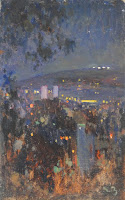
Cityscape at Night, France, Nicolas BeckerCannes, France Seascape Landscape Painting, Nicolas BeckerFloral Arrangement Still Life, Nikolai Becker
Waterfall Landscape Scene, France, Nikolai BeckerWooded Park Landscape Painting, France, Nikolai BeckerSquirel in Pine Tree, France, Nikolai Becker

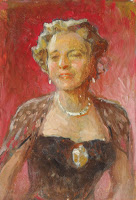
Beach Landscape, Cannes, France, Nicolas BeckerLandscape with Palm Trees, Cannes, France, Nicolas BeckerPortrait Study of Ballerina, Nicolas BeckerPortrait Study of Elegant Woman, Nikolai Becker


Wednesday, June 17, 2015

Audubon's 'Birds of America' - Four Original Prints

The blog has moved!
Visit us at www.ninecarolineantiques.com for updated blog content
View this blog entry on the updated Nine Caroline Antiques website


"The Birds of America" is the iconic work of hand-colored, life-size prints by the famed naturalist, ornithologist, and illustrator John James Audubon. The book was first published as a series between 1827 and 1838 with the intent to document every known bird in the United States. Audubon painted over 1000 individual birds, including six now-extinct birds: the Carolina parakeet, passenger pigeon, Labrador duck, great auk, Esquimaux curlew, and pinnated grouse.

Four original prints from the 19th century "double elephant" editions published by Robert Havell & Sons are now available exclusively in our store. These beautiful pieces of Audubon's "Great Work" are an extraordinary feat of observation and artistry, and would be a remarkable addition to any collection.

The full group can be found at our store.

John James Audubon (1785-1851) was born in the French colony of Saint-Domingue (now Haiti) as Jean-Jacques Audubon. His father, Jean Audubon was a sugar plantation owner as well as a French naval officer (and privateer) who helped the American cause during the Revolutionary War. The rising slave unrest in the Caribbean urged Audubon Senior to sell part of his plantation, purchase property in Pennsylvania, and then return to France with his children in 1791. John James Audubon was drawn to birds and nature even as a boy, roaming the fields around his home to draw birds eggs and nests. 

In 1803, John James Audubon immigrated to the United States to avoid conscription to Napoleon's armies. He took up residence in Pennsylvania, a few miles from Valley Forger, and soon became consumed with naturalistic pursuits. He set about studying American birds, noting the close ties between the environment or nature of a place and the accompanying common traits of its wildlife. Audubon became determined to scientifically record behavior and illustrate all of the known American birds in the most thorough and realistic manner possible.

Audubon painted 435 illustrations of over 1000 individual birds, using primarily watercolors and pastel crayons. Unable to find financial support in America for his "Great Work", he sailed to the United Kingdom with 250 of his original illustrations. In 1827, he joined with Robert Havell, a London engraver to create "The Birds of America", also known as the "Havell Edition" or the "Double Elephant Folio". The edition was printed on the largest format paper available for printing in the early 19th century: approximately 26" x 39". Audubon insisted on this impressive size in order to accommodate the life-size scale of his drawings. Each plate was engraved from Audubon's original illustration and then hand-colored. The cost was prohibitively expensive but found support from such notables of the day as King Charles X of France and Queen Adelaide of Britain (wife of King William IV). Many of the original subscribers chose to bind their folios into large four volume sets once the publication was complete (which took over ten years to finish). The  A later edition of "The Birds of America" was published by J. T. Bowen of Philadelphia in a smaller and therefore more affordable format.

Only 120 complete copies of "The Birds of America" from the original Havell Edition are known to survive. Many are held in public institutions, and the New York Historical Society holds all of Audubon's preparatory watercolors. These beautiful prints are a remarkable piece of history. Take a closer look at the prints available in our store here.


Monday, June 15, 2015

Vintage Art Deco Jewelry: The Etsy Collection

After a nice, meditative break, Nine Caroline is back and even more fabulous than before, and with a few updates: We've opened up an Etsy shop! And we'll be managing some of our jewelry and decorative antique sales via our online shop. 

Check our new Etsy digs out here

Moving our inventory around has allowed us to rediscover some pieces that represent a glamorous touchstone in the history of art and design. A few of the pieces we've moved to our Etsy shop are wonderful examples of Art Deco jewelry. A lot of the items we receive can be classified as a part of the Art Deco movement --A movement concentrated heavily in the use of elegant and non-traditional shapes, lines and designs. 

Art Deco, or Syle Moderne originated as an architecture and decorative arts movement in the 1920s as a response to, and evolution of the Art Nouveau, Cubism, and The Bauhaus movements.
    Art Deco artists also pulled influence from Egyptian and American Indian designs, as well as elements from nature. Art Deco style reflects chic modernity, technology, and a futuristic aesthetic.

Fabulous jade and 14k gold Art Deco necklace
While the Art Deco movement began in the 1920s in terms of art and architecture, Art Deco Jewelry become  popular in the 1930s. The Art Deco design represented modernist art turned into fashion intended to pull away from traditional forms in a sleeker and more elegant manner than previous styles.

Our assortment of Art Deco rings, necklaces, and brooches are characterized by beautiful color combinations, smooth lines, and geometric shapes and designs both simple and elaborate.
Initially, Art Deco was a luxury style, employing sleek and iridescent materials like crystal, pearl, silver, turquoise and jade. Jewelry from the Art Deco movement was designed primarily to make a statement in an elegant, less floral, adorned and detailed fashion than its Art Nouveau and Victorian Predecessors. 

The Art Deco style is not limited to vintage jewelry, interior design and architecture. Many contemporary artists are classified as Art Deco representatives. We recently came into a collection of modernist brooches hand designed by artist Nelly Natzler, sister of famed modernist ceramicist Otto Natzler. 

Handcrafted brooch by Nelly Natzler
Our collection of brooches is punctuated perfectly by our assortment of Natzler originals.
These brooches are charmingly characterized by bold and pastel hues, combined with sleek lines and unconventional shapes to create one-of-a-kind pieces that remain timelessly fashionable.

 Natzler was an Austrian born artist and the older sister of Otto Natzler. Nelly and Otto, both born in Vienna, were interested in the arts and studied various mediums. Otto studied violin and then textile design until meeting his second wife, Gertrud, who introduced him to ceramics. Otto and Gertrud would go on to fantastic success with their partnership in the United States. Nelly, a lesser known Natzler, but nonetheless an artist in her own right, won a $5,000 prize in a Paris art show in 1938. She astutely used her winnings to help her family flee from the then German invaded Austria to the United states. 


Hand crafted brooch by Nelly Natzler
This jewelry came to us from an elderly couple in Upstate New York. This couple knew Otto & Gertrud's sister-in-law, Cora Natzler. Cora was in possession of this brooch and kindly gifted it to the couple. 

This wonderful enamel on copper brooch painting depicts an abstract, geometric design in fine blue, green, pink, and yellow colors. It is singed with her initials "NN." 

Art Deco and modernist styles like these have made thier way back into the main focus of popular culture in movies such as the 2013 remake of The Great Gatsby with Leonardo DiCaprio, and in wedding fashion with the growing popularity of Art Deco gowns.


Art Deco will always be a staple of modernity, even more than 90 years after the movement began. Stay chic with 9CA and visit our Etsy shop to view our collection of Art Deco and modernist jewelry. We've got vintage pieces and other unique treasures like these to grace our inventory, and we'd love to share them with you.